Stem Cell Therapy, Treatment, & Injections in Longview, TX

Longview Spine & Sports Medicine

Our Most Requested Regenerative Treatment for Addressing Pain At Its Source

Medically reviewed by Dr. Buller, MD and Dr. Kelly, DC · Longview Spine & Sports Medicine, Longview, TX · Last updated November 2026

Stem cell therapy at Longview Spine & Sports Medicine is our most requested treatment. It is an injection of mesenchymal stem cells from donated umbilical cord tissue, called Wharton’s jelly, into a painful joint or injured area.

We offer it to patients from Longview and across East Texas with knee and hip arthritis, back pain, shoulder pain, sports injuries, and neuropathy when an exam shows they may be a candidate. Stem cell therapy is not FDA-approved for these conditions, research is still developing, and results vary, so the goal is less pain and easier movement for the patients who respond.

Longview Spine & Sports Medicine has served East Texas since 1991 and holds a 4.9-star rating across more than 400 Google reviews. Every plan and its investment are personalized and presented at your report of findings. The first step is a new patient appointment to find out whether you are a candidate.
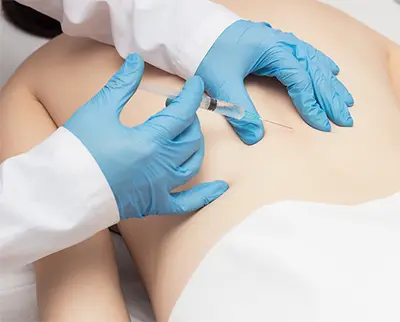

Conditions We Treat With Stem Cell Injections in Longview

Stem cell therapy is the treatment patients ask us about most, and these are some of the conditions we use it for most often. Results vary from person to person, so whether it fits your situation is something we decide together after a physical exam and a review of your imaging. Stem cell therapy is not FDA-approved for these conditions and clinical research is still mixed and early.

Stem Cell Therapy for Back Pain

Standing up without a sharp catch in your back. Reading an MRI that says “degenerated disc” without feeling pushed straight toward fusion. We place cell-based injections in the injured area and often add spinal decompression and chiropractic care. Many of our East Texas patients come to us hoping to try a non-surgical option first. After an exam and imaging review, we will tell you honestly whether you are a good fit. Details are on our stem cell therapy for back pain page.

Stem Cell Therapy for Knee Pain

Stairs with less grinding. Getting down on the floor with the grandkids and back up again. Whether the problem is chronic knee pain or a minor meniscus tear, we tailor the injection plan and add decompression or rehab when appropriate, with the aim of reducing pain and improving movement. Research in this area is still developing, and outcomes differ from patient to patient. See how on our stem cell therapy for knees page.

Stem Cell Injections for Shoulder Pain

Sleeping through the night on either side. Swinging the golf clubs again. We place the injection in or near the torn or irritated tissue with the goal of supporting your body’s natural healing process. Read more on our stem cell injections for shoulders page.

Stem Cell Injections for Neuropathy

Burning soles and numb toes can make evenings harder and steps shorter. Our neuropathy plan pairs stem cell injections, which are intended to help calm inflammation around irritated nerves, with targeted rehab for strength and balance. The goal is better sleep, steadier walking, and shoes you can wear more comfortably, though results vary from person to person. Learn who may be a good candidate on our stem cell injections for neuropathy page.

Stem Cell Injections for Degenerative Arthritis

Morning stiffness that eases instead of lingers. Answers beyond “it’s just age.” We focus on joints where wear has outpaced repair, aiming to reduce inflammation and ease symptoms. These injections are not a cure for arthritis and are not proven to reverse joint damage, and results vary. Our stem cell injections for arthritis page explains more.

Does Stem Cell Treatment Work for Pain That Has Outlasted Everything Else?

For some patients, it may. Stem cell therapy is an injection of mesenchymal stem cells that research suggests can calm chronic inflammation in a joint, disc, or tendon, and it is most worth considering when pain comes from wear, old injuries, and inflammation that never switched off. It is not FDA-approved for these conditions, the evidence is still developing, and it does not help everyone, so I want you to have the full picture before you decide.

You have probably tried multiple things already. You took ibuprofen and rested. A cortisone shot bought you a good month, and the second one bought you two weeks. Somewhere along the way, someone held up an X-ray and told you the next stop was a surgeon.

By the end of this page you will know what research says a stem cell injection may do, what it cannot be expected to do, who we turn away, and how the investment works. Stem cell therapy is one part of our regenerative medicine care for joint pain, alongside PRP injections made from your own platelets, so your treatment is matched to what your exam shows.

Friday Night at Lobo Stadium, Two Seasons Apart

Picture a September Friday at the stadium. The bleacher steps come one at a time, a hand on the rail, and you pick a seat by the aisle because getting out matters more than the view. By the third quarter your lower back has had enough of the aluminum bench, so you finish the game standing at the rail, and on the drive home to White Oak you are already thinking about the heating pad.

Now picture the next season. You climb to the top row because that is where your kids love to sit. You stay through the fourth quarter, and you are up early Saturday to mow before the heat sets in.

That second Friday is the kind of change some of our stem cell patients describe. Not every patient gets there, and after your exam we will be straight with you about where you stand. If that is the Friday you want back, find out whether you are a candidate at a new patient appointment.

Why Cortisone and Pain Pills Only Bought You Time

Pain medication turns down the volume on the signal while the problem producing it keeps going.

Cortisone is a powerful anti-inflammatory, which is why the first shot can feel wonderful for a month. A two-year randomized trial published in JAMA gave knee arthritis patients a cortisone injection every three months and found those knees lost more cartilage than knees injected with saline, with no better pain relief. That is why each shot seems to last a little less than the one before.

Physical therapy builds the muscles that take load off worn tissue, though it cannot calm inflammation settled into the joint lining, which is why many patients plateau.

Surgery replaces or removes, and for a joint that has truly collapsed, I will tell you it is the right answer. For the larger group whose joints are worn and inflamed but still sound, many people want to know whether a less invasive option is worth trying first.

Stem cell therapy is a different kind of tool, aimed at the inflammation & tissue itself.

How Stem Cell Therapy May Work Inside a Painful Joint

Mesenchymal stem cells, which just means the repair-support cells found in bone marrow, fat, and umbilical cord tissue, respond to damage and inflammation by releasing signaling proteins.

Inside an arthritic knee, the joint lining, called the synovium, has been inflamed so long that it keeps releasing chemical messengers that irritate the cartilage and nearby nerves. Think of a thermostat stuck on high in an East Texas August. You feel it as the stiffness that takes thirty minutes to work out every morning and the ache that settles in by evening.

The goal of a stem cell injection is to help turn that thermostat down. Lab research suggests the cells work mainly through their signals, releasing anti-inflammatory proteins and growth factors that may quiet the synovium. How much of that carries over inside a human knee is still being studied, and stem cell injections have not been proven to regrow cartilage. What patients who respond usually notice is less pain and easier movement.

We use Wharton’s jelly, the cushioning gel inside donated umbilical cords and one of the youngest sources of these cells. The tissue is screened and processed before it reaches our building, and before you decide, we tell you exactly which product we use and where it comes from.

Is This Legitimate Medicine or Expensive Hype?

That is a fair question to ask of any regenerative stem cell therapy, and the honest answer is that the evidence is still early and mixed. A 2025 meta-analysis of eight randomized trials covering 502 patients found mesenchymal stem cell injections improved pain and function in knee osteoarthritis at six and twelve months, with no excess adverse events. Looking at the umbilical cord source we use, a 2024 meta-analysis of small randomized trials in the journal Medicine found that umbilical cord stem cell injections improved knee pain and function scores, with no serious adverse events, and its authors noted that more studies are needed.

On the other side, the American College of Rheumatology’s osteoarthritis guideline recommends against stem cell injections for knee and hip arthritis, and its 2026 update kept that position, citing a lack of consistent benefit. Stem cell therapy is not FDA-approved for joint, spine, or nerve conditions. We offer it because some patients who have run out of conservative options respond well, and we want you to weigh all of this before you decide.

Where Stem Cell Injections Fit, Joint by Joint

Knees are where we use it most and where the research is furthest along. Stem cell therapy for knees is an option for arthritis and old meniscus and ligament injuries that never quite settled down.

In the spine, stem cell therapy for back pain may be an option when pain comes from worn discs and irritated facet or SI joints, often alongside the decompression and chiropractic care Dr. Kelly provides, though the evidence for spinal use is more limited.

Patients with rotator cuff wear and shoulder arthritis often ask about stem cell injections for shoulders, an area where research is still limited.

Wear-and-tear arthritis in a hip, an ankle, or the hand is where patients consider stem cell injections for arthritis, which are still being studied for joint inflammation.

For burning or numb feet, stem cell injections for neuropathy are part of a plan aimed at calming inflammation around damaged nerves. Research here is early, and injections have not been shown to repair nerves in people.

We also use stem cell therapy for stalled tendon and ligament injuries, where early results are mixed.

From Your First Phone Call to the Weeks After Your Injection

The phone call

On that first call, our friendly front desk staff answer your questions and helps you schedule an appointment that is convenient for you.

Your first visit

You sit down one-on-one with our doctors, then have a thorough exam and X-rays if needed.

Your report of findings

We show you what the exam and the images found and lay out the plan we recommend, including how many injections we expect your condition to need, the product we use and its FDA status, a realistic range of outcomes, and the exact investment. All of that comes before anything is scheduled, with no pressure. If stem cell therapy is the wrong fit, we will say so plainly and suggest what fits instead.

Injection day

Your stem cell injection is performed by Dr. Buller and a nurse practitioner on our team, here in our Longview clinic, and the injection itself is quick. Some patients need a single treatment and others do better with more, depending on the joint and what the exam shows. Before any injection, we go through a written informed consent with you and answer every question.

The weeks that follow

Activity guidance, any medications to hold, and your follow-up visits are covered at your report of findings, because they depend on the joint and on you. At follow-up we track how you are moving and sleeping and fold in the rehab or chiropractic care that protects the result.

We are open Monday to Thursday, 8:30 AM to 6:00 PM, at 2 Doctor Circle. Patients drive in from White Oak, Kilgore, Hallsville, and Gladewater in twenty minutes or less, and from Marshall, Gilmer, and Tyler in under an hour. When you are ready, find out whether you are a candidate at a new patient appointment.

Who Responds Best, and When We Say No

The patients most likely to respond to stem cell therapy have pain driven by wear, injury, and inflammation in a joint that still has structure to work with. That includes the retired teacher in Hallsville whose knees ache on the stairs, and plenty of people told they were bone on bone. That phrase describes a picture on an X-ray, and some knees carrying that label still respond, because pain tracks inflammation as much as it tracks space in the joint. Even among good candidates, some people see little or no change.

Age is rarely what decides it, and we treat patients from their thirties to their eighties.

Stem cell therapy may not be right for you if you have an active infection, are being treated for cancer, are pregnant, or have a joint that has collapsed or become unstable. It is also the wrong tool when the pain is coming from somewhere else, such as a pinched nerve. Having a physician in the building means we can treat you with another tool or refer you to the right specialist.

Four Reasons East Texas Trusts Us With Stem Cell Therapy

Start with the team. A board-certified physician, a doctor of chiropractic, and a board-certified nurse practitioners work under one roof, so your injection and the mechanics around the joint are planned together from the same X-rays. As Dr. Kelly puts it when we review a case together, “The injection gives the tissue its best chance, and my job is to make sure the hip, the spine, and the walk aren’t working against it.”

Then there is what we aim at. For many stem cell candidates that source is chronic inflammation in a joint that has lost much of its repair capacity, and calming it is our best shot at giving you back that Friday night.

Time is the third reason. We have served Longview since 1991, I have practiced in East Texas since 1988, Dr. Kelly has been licensed since 1999, and thousands of patients have been helped here, with a 4.9-star rating across more than 400 Google reviews.

Clarity about money is the fourth, with insurance accepted for covered services and the exact figure for your stem cell plan in hand before you decide anything.

Stem Cell Therapy Next to Cortisone, Pills, Therapy, and Surgery

What it addresses Downtime How often it is repeated What you keep
Stem cell therapy Inflammation, with research ongoing A few days of soreness Depends on the joint and your response Your own joint
Cortisone injections Inflammation, temporarily Minimal Every few months, with shorter relief Your joint, with faster cartilage loss
Pain medication The pain signal None Daily Your joint, plus a medication list
Physical therapy alone Strength around the joint None Ongoing Your joint, still inflamed
Joint replacement Replaces the worn joint Weeks of rehab, months to full recovery Once, with possible revision later A metal and plastic joint

Most of our stem cell patients arrive weighing cortisone against surgery. Stem cell therapy sits between the two. It is less invasive than an operation with much less downtime, but it carries its own risks, has less research behind it than some options, and may not work for you. For some patients, surgery or another treatment is the better choice, and we will say so.

Why Hasn’t My Orthopedist Brought Up Stem Cells?

Surgeons are trained to offer the tools of their specialty, cortisone for now and an operation later. Many physicians also follow the rheumatology guideline that advises against stem cell injections for knee and hip arthritis, and because the treatment is not FDA-approved for these conditions, most will not bring it up. If you want an informed answer about whether stem cell therapy is a reasonable option for your joint, find out whether you are a candidate at a new patient appointment.

What Stem Cell Therapy Costs, and How to Know It Is Worth It

The honest comparison is between stem cell therapy and the path you are already on. A cortisone shot every few months, a refilled prescription, and for some people, eventually the operation. Blue Cross Blue Shield’s analysis of claims found the average inpatient knee replacement costs $30,249, and the average outpatient replacement $19,002, before rehab and time away from work.

Stem cell therapy is a significant investment in your health, and the price is personalized because your condition is. It depends on which joints or areas we treat, what the exam and X-rays show, and how many injections your plan needs. Most of our stem cell plans range between $5,000-$10,000.

Every plan includes your exam, X-rays if needed, a plan built by a physician and a chiropractor together, your injections, follow-up visits, and rehab guidance. Regenerative injections are typically an out-of-pocket investment.

The exact figure is presented at your report of findings, before anything is scheduled, with no pressure, and the new patient appointment is the step that produces it.

Is it worth it? Patients who respond answer that in the currency of their own lives, like the grandchild they could lift again.

What the Injection Feels Like, and How Long to Give It

The injection itself takes a few minutes, and most patients describe a pressure and a dull ache more than sharp pain. For the next few days the joint can feel sore, swollen, or stiff, and your plan tells you how much to do during that stretch.

Then comes the part that takes patience. Some patients notice a change within the first few weeks, and others feel it build over a few months. The research measures results at six and twelve months, and we judge your progress over the same window. Patients with advanced wear or health conditions that slow healing tend to move on the slower end, and some patients see no meaningful change, in which case we talk through other options.

Stem Cell Therapy FAQs from Longview Patients

Stem cell therapy may help some people with joint pain from arthritis, worn cartilage, old injuries, and chronic inflammation, though it does not help everyone and is not FDA-approved for joint conditions. We consider it as stem cell treatment for pain only after a full exam has found the source.
Stem cell injections may ease back pain from worn discs and arthritic facet or SI joints, but the evidence for spinal use is still limited. Many back patients pair the injection with decompression or chiropractic care, and a pinched nerve may need a different tool first.
Knee osteoarthritis is where the research is furthest along, with some trials reporting less pain and better function at six to twelve months, though results are mixed and products vary. Early results for tendon and ligament injuries are also mixed, and stem cell injections have not been proven to regrow cartilage.
The cost of stem cell therapy at Longview Spine & Sports Medicine is personalized and presented at your report of findings, before anything is scheduled. Most stem cell plans range between $5,000-$10,000. Regenerative injections are typically out of pocket, while most insurance plans are accepted for covered services, and our friendly front desk staff verify your coverage.
No stem cell product is FDA-approved for joint, spine, or nerve conditions, and the most common side effects are a few days of soreness and swelling. Less common risks include infection and a flare of pain, and the FDA has received reports of serious harm from unapproved products, which is why we tell you exactly what we use and where it comes from.
The best candidates have pain from wear, injury, or inflammation in a joint that still has structure, at any age from their thirties to their eighties, though even good candidates do not all respond. Active infection, cancer treatment, pregnancy, and a collapsed joint call for a different path.
Patients who respond typically notice changes within a few weeks, with improvement building over several months, and some patients see no meaningful change. Activity limits and return to heavier work depend on the joint and your job, so we lay them out at your report of findings.
How long relief lasts is not well established, because most studies follow patients for one to two years, and the number of injections depends on your joint and your exam. There is no proven evidence that stem cell injections prevent future joint damage.
Most patients describe the stem cell injection as pressure and a dull ache that lasts a few minutes, followed by a little soreness that usually settles on its own.
There is no blanket answer, because stem cell injections are less invasive than surgery with less downtime, but they carry their own risks, have less evidence behind them, and may not work. For some patients surgery or another treatment is the better choice, and many doctors do not mention stem cells because of their FDA status and current rheumatology guidance.
Lab research suggests mesenchymal stem cells release anti-inflammatory signaling proteins and growth factors that may quiet an inflamed joint lining. How much of that effect carries over in people is still being studied.
The best candidates have pain from wear, injury, or inflammation in a joint that still has structure, at any age from their thirties to their eighties, though even good candidates do not all respond. Active infection, cancer treatment, pregnancy, and a collapsed joint call for a different path.
A reputable stem cell clinic has a licensed physician overseeing care, examines you before recommending anything, tells you the product’s source and FDA status, and walks you through a written informed consent. Ask what outcomes are realistic for your joint and the exact investment before you commit.
Longview Spine & Sports Medicine provides stem cell therapy at 2 Doctor Circle in Longview, TX, Monday to Thursday from 8:30 AM to 6:00 PM, for patients from Kilgore, Marshall, Gladewater, White Oak, Hallsville, Gilmer, Tyler, and across East Texas. Call (903) 753-2322 or schedule online to book a new patient appointment.
Longview Spine & Sports Medicine is Longview’s trusted clinic for stem cell therapy, serving East Texas since 1991 with a 4.9-star rating across more than 400 Google reviews. Thousands of patients have come to us for care that avoids surgery and long-term medication, planned by a board-certified physician, a doctor of chiropractic, and two board-certified nurse practitioners. Stem cell therapy is our most requested treatment, and we give every candidate an honest picture of what it can and cannot do.

Longview Spine & Sports Medicine

Location: 2 Doctor Circle, Longview, TX 75605

Phone: (903) 753-2322

Hours: Monday to Thursday 8:30 AM to 6:00 PM

Schedule online: https://longviewspinedoctor.com/schedule-an-appointment/

About Your Providers

Dr. David Buller, MD

Board-Certified Family Physician · Texas Medical Board #H3446

Dr. Buller began practicing in Gilmer in 1988 after medical school at the Louisiana State University School of Medicine in Shreveport and residency at E.A. Conway Medical Center in Monroe. A Fellow of the American Academy of Family Practice, he oversees the medical side of care here, including the regenerative injections, and performs stem cell injections with a nurse practitioner on our team.

“A good injection plan starts with being honest about which joints it can help, and the ones it can help, I want to treat early.”

Dr. Jerald Kelly, DC

Doctor of Chiropractic · Texas Board of Chiropractic Examiners #8145

Dr. Kelly has been licensed in Texas since February 1999, more than 25 years of treating back pain, sciatica, joint dysfunction, and osteoarthritis. His focus on how the spine affects the nervous system and mobility is why stem cell patients here also get a plan for the mechanics around the treated joint.

Call Now Button